
The Alberta Labour History Institute collects, preserves, and disseminates the stories of Alberta’s working people and their organizations. This website includes full transcripts, podcasts, and profiles of our interviewees. It also includes videos, booklets, themed essays, annual calendars, and a link to a book created by ALHI. To learn more about us, visit About. For help with navigating the site, visit How To Use This Site.
What’s New?
2027 ALHI Calendar: Labour’s Role in Winning and Extending Social Legislation
Event: Maria Dunn: Packingtown
New and updated worker profiles: John Wilgus; Maria Halushka; Clarence Lacombe
New themes: Precarious Workers in Alberta; Hunger March (1932)
Booknotes: The Red Baron of IBEW Local 213: Les McDonald, Union Politics, and the 1966 Wildcat Strike at Lenkurt Electric by Ian McDonald; Enshittification: Why Everything Suddenly Got Worse and What to Do About It by Cory Doctorow
2SLGBTQ+ in Alberta
Interviews with 2SLGBTQ+ Activists in Alberta
Without Discrimination: The Delwin Vriend Case
Vriend vs. Alberta: the courage, the team, and the communities that changed Alberta’s human rights law
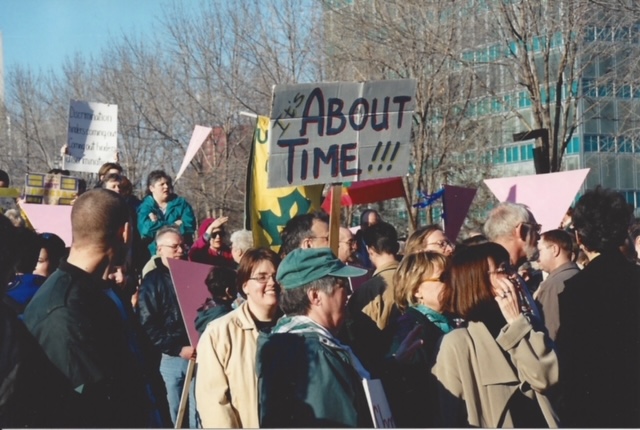
Photo by Jo-Ann Kolmes.
Listen here to the ECAMP Podcast bonus episode Without Discrimination: The Delwin Vriend Case.
ECAMP · S02E13 | Without Discrimination: The Delwin Vriend Case
The Delwin Vriend case had a profound effect on 2SLGBTQ+ rights in Alberta, nationally, and internationally. In 1998, after a long, courageous, and determined struggle by Delwin Vriend and the 2SLGBTQ+ community, the Supreme Court of Canada held that Alberta’s omission from its human rights legislation of sexual orientation as a ground protected from discrimination was unconstitutional. The Court added sexual orientation as a protected ground into the human rights statute, so that going forward, discrimination based on sexual orientation in employment, accommodation, provision of goods and services, etc. was prohibited, and complaints of discrimination could be filed.n and Calgary in the first decade of the 1900s. Early attempts at unionization were not successful. Workers at Burns Meats in Calgary went on a failed strike in 1920 for union recognition. In 1937 workers at three Edmonton plants staged sitdown strikes to win recognition but these also failed after employers shifted production to other plants, brought in strikebreakers to assault striking workers and engaged in anti-union rhetoric in the media.