
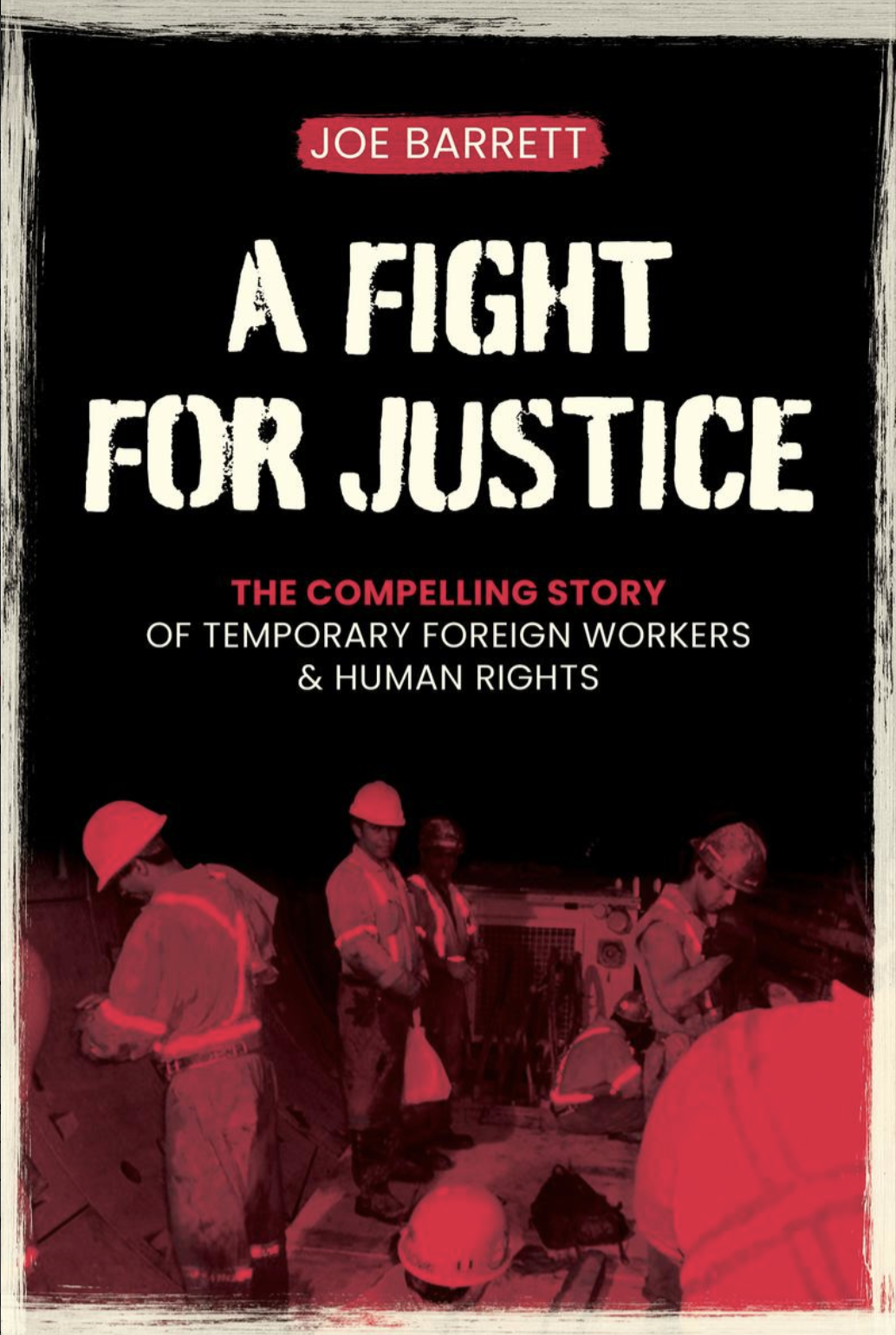
Image caption: Cover image, Mosaic Books
A good thriller is fast-paced, with lots of tension, unpredictable twists, and memorable characters. While you might reach for authors like Stephen King, Dan Brown, or James Patterson for your reading thrills, you should also consider this 300-page look at the complicated twists and turns of courts and human rights tribunals connected to the construction of the Canada Line.
Joe Barrett’s examination of the temporary foreign workers brought from Costa Rica (and elsewhere) to Canada in 2006 to work on tunneling for the Canada Line extension of Vancouver’s Sky Train system reads like a thriller while it outlines a very real labour narrative. A Fight for Justice traces these workers’ efforts to unionize and follows the subsequent human rights hearing about discrimination they experienced. Readers are drawn in, turning the pages to follow the maneuvers of lawyers, corporate bosses, and labour union staff. Through the narrative, readers get to know many of the several dozen workers who were part of this project, and by the end of the book there is a real satisfaction in re-encountering the workers a few years after the events of the story to see what has happened with their lives.
Canada has a long, ugly history with using workers from other parts of the world to achieve goals that have economic benefit for capitalist owners, but no investment in creating prosperous Canadian communities or good lives for workers and their families. Temporary foreign workers have often been exploited as a means to get difficult jobs done, from desperate colonists brought to 18th century French and English outposts to work in the fur trade, to Chinese workers brought to build railroads in the 19th century, to Central Europeans brought to begin farming on the prairies in the early 20th century, through to the workers today who serve coffee, provide personal nursing care, and clean warehouses. These workers face poorer conditions, for lower pay, with fewer rights, than those experienced by Canadian workers. This attempt to create tiers of workers offers a bad deal to foreign workers and erodes the quality of employment for Canadians, too.
Barrett introduces us to several dozen men who came primarily from Costa Rica—with a few originating in Colombia and Ecuador—to work on tunneling for the new rapid transit line in Vancouver. Soon after they began working, a Canadian on the same work site reached out to the BC Building and Construction Trades Council (BCBCTC) to express concern about these workers, who were working long hours and being paid much less than Canadians. The men had signed contracts before coming to Canada—often with paperwork in English that they didn’t understand, and in some cases with nearly blank pages that were later stapled to pages they never saw. The men were told Canadian laws did not apply to them, and the abuses they experienced are at the centre of the story.
From the beginning of the project, Construction and Specialized Workers’ Union Local 1611 was watching closely, as was the BCBCTC, where Barrett, a fluent Spanish speaker, worked as researcher. In this book, Barrett presents the record of how the union worked to support the men, not only in the process of applying for union certification, but in a range of ways that paid attention to their humanity. The union showed care and concern for the workers as people who were homesick and doing dangerous work, intimidated by a powerful employer holding all the cards. Despite ups and downs, and even when some decided they were no longer willing to support the union, the union stuck with the workers, at considerable economic cost. Many of the advocacy relationships detailed in the fight became lasting friendships.
Barrett’s book, told from the perspective of someone at the heart of all that happened over the years, is a valuable reminder of the positive importance of the core values of workers coming together in a union. The narrative of the Canada Line case is gripping, but the book further delivers on a message about the power of solidarity and the truth that ordinary working people everywhere have more in common than any have with the wealthy few who own and run the corporations that employ them.
By Jim Gurnett