
Ducks: The human and environmental costs of ‘good jobs’
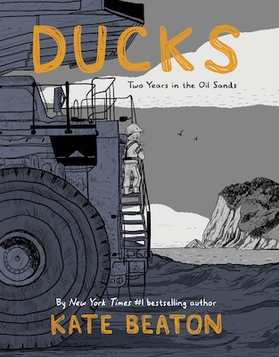
Cover image, Drawn and Quarterly
Kate Beaton’s 2022 graphic memoir Ducks: Two Years in the Oil Sands shines a light onto the human side of the Alberta oil sands through her own experiences living and working there for a period of two years between 2005–2008. Living here in Alberta, everyone knows someone who has worked up in the north, but for many of us the reality of life and work in the oil sands is obscured from our view by the sheer distance that lies between Fort McMurray and the prairies that host most of Alberta’s population. While the extraction of petrochemicals in the North is typically presented as a source of “good jobs” to people seeking reprieve from poverty and unemployment, Beaton’s memoir exposes the myth. She provides an intimate glimpse behind the curtain, to show us the experiences of a working class that has been worn down by the struggle of life under the harsh and isolating conditions of the oil sands and the toll those “good jobs” take.
Beaton’s story is a whirlwind that places before us what Friedrich Engels calls the social murder of the working class at the hands of the capitalist system (see Engels’s Conditions of the Working Class in England). The working people of Fort McMurray and the surrounding communities are exposed to violent conditions at every turn: wage subsistence that cannot satisfy their needs; isolation that drives people towards anti-social and harmful behaviours (such as drug abuse); rampant sexual exploitation that goes unreported and unresolved due to overwhelming social pressures and the direct influence of corporate management within the living and workplace environments. The poisoning of the water, the soil, the air, and ultimately the people living there are distant concerns for those far-off executives counting their profits.
This story does not leave us with some satisfying political platitude à la Erin Brockovich about how this could all be solved by some brave individual standing up and speaking out. Instead, Beaton presents the more difficult truth that this is the way that things are, and that they are like this for a reason that is beyond the means of any individual to resolve. Ducks is also equally critical of those journalists who only look to the North for their next bit of salacious gossip and those activists whose salacious acts of resistance do more to increase the burden upon workers than they do to place any real pressure on industrial decision makers. Beaton continually reaffirms that the issues that plague the North do not find their origin in the hearts and minds of her fellow workers—our fellow countrymen who have been driven onto the northern frontier by economic necessity—but in the conditions of life shaped by those corporate interests that our society places far above any concern for human dignity or the responsible management of natural resources.
While Ducks itself does not deliver any call for labour action, it nonetheless contains this germ of class-consciousness. It is clear on every page of this work how our society’s failure in the North is one that is born out of a capitalist system that cares only for production of profit and is willing to toss workers and any innocent bystanders out with the tailings if it helps them to squeeze out just a bit more value. Ducks: Two Years in the Oil Sands is an invaluable record of personal experience that can remind us of the human cost that the working class is forced to pay under the capitalist system and how dearer that cost is when workers go unorganized and unconvinced of their own class interests.
It is easy to lay blame at the feet of the capitalist class for the woes of life under this malignant economic system. However, in Ducks I find an important reminder that the working class faces a far more difficult burden and a much higher calling than simply pointing accusatory fingers. The question of what is the alternative and how can we get there is far more difficult and important than the question of fault. While Ducks shows the reality of isolation and struggle, the organization and collective action of the working class points the way to future alternatives.
By Christopher Hashmi